The Times archive (TimesMachine) needs a New York Times subscription. Stories from English Wikipedia's current-events pages and year articles (CC BY-SA 4.0), shortened to a sentence or two. Stories with a “Read more” link were found through Wikidata's dated events and summarized from that Wikipedia article.
That day · WorldThe Avro Canada CF-105 Arrow delta wing interceptor aircraft is unveiled.That day · WorldSanta Mercedes, a Grace Line freighter, became the 200,000th vessel locked through the Panama Canal.
The day
That morning
The weather
59° high · low 51°
Overcast. It was a mild day in Chicago.
Reconstructed from the ERA5 climate record for the Chicago area. A model of past weather, not a station reading. Open-Meteo.com (CC BY 4.0)
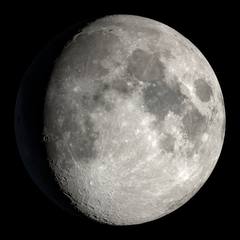
The moon that night
Waxing gibbous
About 10 days into its cycle.
Calculated from the moon's 29.5-day cycle, accurate to about a day. Image: NASA's Scientific Visualization Studio.
Your signs
Star sign
Libra
A air sign, traditionally said to be fair, charming and sociable.
Chinese zodiac
Fire Rooster
Traditionally said to be observant and hardworking.
Sun signs by the usual date ranges. Chinese year from the date of Lunar New Year.
The #1 song that week
“Honeycomb”
Jimmie Rodgers with Hugo Peretti and His Orchestra. Plays right here.
Billboard, week of September 30, 1957 (Best Sellers in Stores; the Hot 100 began in August 1958). Chart history via Wikipedia.
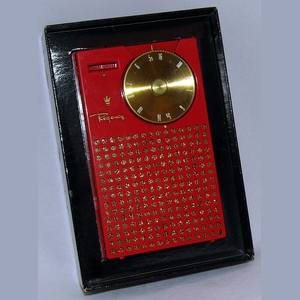
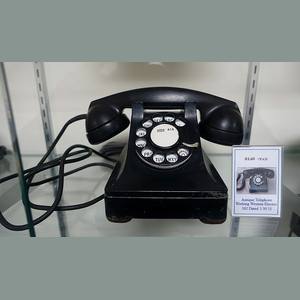
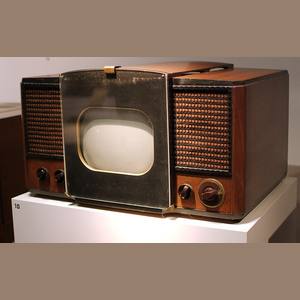
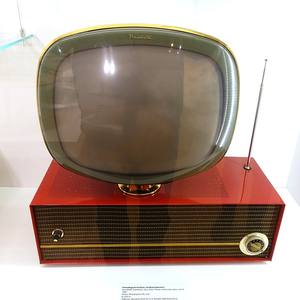
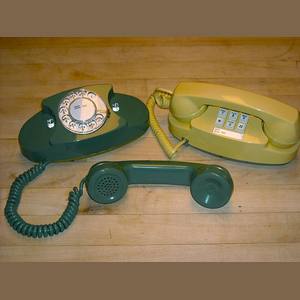
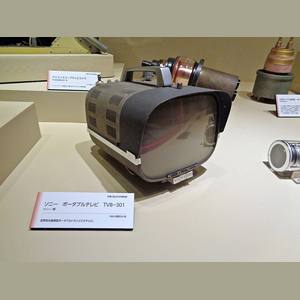
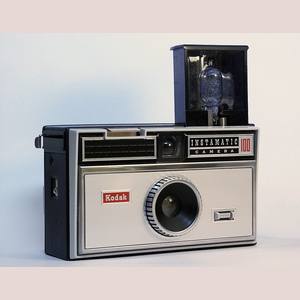
Regency TR-1 transistor radioThe Regency TR-1, the first commercial transistor radio, went on sale in 1954 for $49.95Western Electric 302 telephoneThe 302 was the Bell System's standard desk phone until the 500 began replacing it in 1949RCA 630-TS televisionTV was brand new: in 1948 just 1 percent of U.S. homes had a set; by 1955, 75 percent did
Museum and collection pieces via Wikimedia Commons, credited below. Names link to Wikipedia.
The house in the 1950s
A 1,350-square-foot ranch house built in the mid-1950s in California, with board-and-batten siding and a dovecote over the garage
Back in Our DayThe Day You Were Born
The day she arrived
Linda
October 4, 1957 · Chicago
Make it a book
Here's Linda's book
This whole issue, printed in full color and bound as a hardcover with Linda's name and birthday on the cover. From $79, with free shipping.
1957Bubble Wrap Alfred Fielding and Marc Chavannes invented Bubble Wrap while attempting to create a three-dimensional plastic wallpaper.Read more
1957Frisbee Wham-O named its Pluto Platter flying disc the "Frisbee," after hearing college students call it that.Read more
1957First nuclear power plant The Shippingport Atomic Power Station in Pennsylvania first sent electricity to the grid, the first full-scale U.S. nuclear plant.Read more
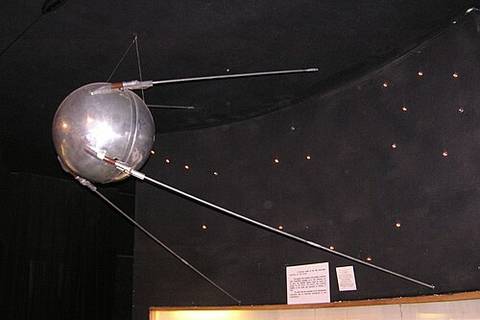
1957WorldSputnik The Soviet Union launched Sputnik 1, the first artificial satellite, starting the Space Age.Read more
Bureau of Labor Statistics average prices (U.S. city average) and its historical retail food prices via the Census Bureau · USPS · Dept. of Labor · EIA · Census · Movie tickets: National Association of Theatre Owners, and The Numbers for today's price. “Now” is the latest figure available.
Share the prices
A card with what things cost the year you were born, next to today.
Levittown houses, 1958 (Gottscho-Schleisner)
A 1950s kitchen with pink range and sink in the "At Home in the 1950s" exhibit, Michigan History Museum, Lansing
Woman in a kitchen, Seattle, Washington, 1956
The styles
Ranch house: Long, low single-story houses with open floor plans, attached garages and sliding glass doors; by the 1950s ranches made up nine out of every ten new houses.
Eichler home: Developer Joseph Eichler brought mid-century modern design to everyday tract housing in California subdivisions.
Inside
Pastel appliances - pink and turquoise became popular in the late 1950s
"Mamie pink" - the First Lady's favorite shade set off a trend for pink housewares and bathrooms
TV trays - for eating dinner in front of the television
Tupperware parties - plastic containers sold at home parties
The share of homes lacking complete plumbing fell from 35.5% in 1950 to 16.8% in 1960. Source
Wikipedia architecture and design articles · Census Bureau housing tables. Photos via Wikimedia Commons, credited below.
Each invention's Wikipedia article and “1957 in science”. Photos via Wikimedia Commons, credited below.
Grand openings
Opened the year Linda was born
Places and brands that started in 1957 and that America still knows.
storeFood LionWilson Smith and brothers Ralph and Brown Ketner opened Food Town, now Food Lion, in Salisbury, North Carolina.brand · Jan. 16Marriott HotelsMarriott opened its first hotel, the Marriott Motor Hotel, in Arlington, Virginia.brandDoveDove soap was launched in the United States.
Wikidata and each place's Wikipedia article. Photos via Wikimedia Commons, credited below.
Crazes
What everyone was doing in the 1950s
The dances, fads and sayings of the decade Linda was born.
fad · 1958Hula hoopsWham-O's plastic hula hoop set off a fad in July 1958: 25 million were sold in less than four months.fad · 1955Davy Crockett coonskin capsDisney's Davy Crockett episodes, aired from December 1954 to February 1955, set off a coonskin cap fad selling 5,000 caps a day.fad · 19533D moviesBwana Devil launched a 3D movie craze in late 1952, and 1953 brought hits like House of Wax, watched through polarized glasses.fad · 1952Mr. Potato HeadHasbro's Mr. Potato Head, released in 1952, was the first toy advertised on TV and sold over a million kits its first year.
dance · 1957The StrollIn the Stroll, two lines faced each other while couples took turns dancing down the middle; Billboard flagged it in December 1957.
fad · 1959Phone booth stuffingIn 1959 students in Durban, South Africa, squeezed 25 people into a phone booth, and California college students tried to beat it.
dance · 1959The Hully GullyThe Olympics' 1959 song "Hully Gully" went with the Hully Gully, a line dance whose steps were called out by an MC.
dance · 1952The bunny hopThe bunny hop novelty dance was created at a San Francisco high school in 1952, and Ray Anthony's song became a hit.
“Look! Up in the sky! It's a bird! It's a plane! It's Superman!”
goodbye (a 1955-56 hit song) · 1955For example: “See you later, alligator!” “In a while, crocodile!”Source
“Dig”
to understand or enjoy · 1950sFor example: “I really dig that new Elvis record. You dig?”Source
“Beatnik”
a Beat Generation follower · 1958For example: “A beatnik in a black turtleneck was reading poetry at the coffeehouse.”Source
Wikipedia articles on each dance and fad, and dated slang and catchphrase lists. Photos via Wikimedia Commons, credited below.
New in the stores
Toys, treats and the dinner table
What showed up for the first time in 1957, and what families ate in the 1950s.
toyFrisbeeIn June 1957, Wham-O's founders renamed their Pluto Platter disc the "Frisbee" after hearing college students' name for it.candySwedish FishSwedish candy maker Malaco developed the chewy Swedish Fish for the U.S. market, launching them in 1957.toyCorn PopperArthur Holt invented the Corn Popper push toy in 1957 and sold it to Fisher-Price for $50.foodBurger King WhopperBurger King co-founder James McLamore created the Whopper in 1957, originally selling it for 37 cents.cerealAlpha-BitsPost introduced Alpha-Bits, its letter-shaped cereal, in 1957.toySea-MonkeysHarold von Braunhut developed his brine shrimp novelty pets in 1957; they were sold under the Sea-Monkeys name from 1962.
On the table in the 1950s
TV dinners: the term was first used for a brand of packaged frozen meals developed in 1953 Source
Tuna casserole: casseroles became popular in 1950s homes, and Campbell's printed a tuna casserole recipe in 1952 Source
Green bean casserole: created in 1955 by Dorcas Reilly at Campbell's and spread by a recipe on the soup can Source
Fish sticks: General Foods brought them to stores under the Birds Eye label in 1953 Source
California dip: sour cream and onion soup mix, promoted by Lipton on television in 1955 Source
Jell-O salads: especially fashionable in the suburbs in the 1950s Source
Wikipedia articles for each product. Photos via Wikimedia Commons, credited below.
In style
What people wore
Fashion in America, 1955 to 1959.
WomenFitted bodice, full skirtA teenage girl at home in her prom dress, United States, 1958
MenSkinny necktiesElmer Matson of the Seattle Engineering Department at his desk, Seattle, Washington, 1959
Young peopleJames Dean lookJames Dean in a Warner Bros. publicity still for Rebel Without a Cause, 1955
Young peopleBeatniksContestants for Miss Beatnik of 1959 posing in Venice, California, 27 August 1959
Fitted bodice with a full gathered skirt or a narrow pencil skirt: the decade's two silhouettes
Sack dresses (by 1957): loose body, dropped waist, worn with a cloche; unpopular with many US women
Stiffened nylon net petticoats, worn to hold out the full skirts
Men
Gray flannel suits: dark gray flannel the most fashionable shade, a symbol of corporate conformity
Italian Continental suits: shorter, straighter jackets, narrow trousers without pleats or cuffs
Skinny neckties, patterned with motifs like chess pieces and cocktails, narrowing through the decade
Young people
James Dean look (1955): white T-shirt, blue jeans and red windbreaker, widely imitated
Poodle skirts: felt circle skirts with an appliquéd poodle, worn with ankle socks, saddle shoes and a neck scarf
Beatniks (late 1950s): checked shirts, sweatshirts, jeans, striped sweaters; dance leotards for women
Hair
Elvis Presley look-alike pompadours: spread rapidly among the young, helped by TV
Slick combed-back hair copied from the character Kookie on 77 Sunset Strip
From Wikipedia's fashion history articles (1950s in Western fashion). Photos via Wikimedia Commons, credited below.
Making a living
What people did for work
The most common jobs in the 1950 census, and what they paid.
Telephone operators at their switchboard, Seattle, 1952A 'human computer' reading flight-test data beside her desk calculator, NACA Langley lab, Virginia, 1952
Most common jobs for men
1Farmers4,174,163 workers · 9.8% of men working
2General laborers2,867,324 workers · 6.7% of men working
3Salesmen and store clerks2,106,579 workers · 4.9% of men working
4Farm hands (hired)1,437,281 workers · 3.4% of men working
5Truck and tractor drivers1,388,325 workers · 3.2% of men working
Most common jobs for women
1Saleswomen and store clerks1,311,727 workers · 7.9% of women working
2Office clerks1,252,898 workers · 7.6% of women working
3Maids and household workers1,129,484 workers · 6.8% of women working
4Secretaries781,324 workers · 4.7% of women working
5Elementary school teachers616,208 workers · 3.7% of women working
What it paid
Factory worker: $58.32 a week (1950)
Farm hand (room and board included): $91.00 a month (1948)
Federal minimum wage: $0.75 a hour (1950)
Work back then
About 12 of every 100 American workers worked on a farm (7.0 million of 59.0 million) in 1950.
30.9% of American women had a paying job or were looking for one in 1950 (census count).
A factory worker's average work week was 40.5 hours in 1950.
US Census Bureau occupation tables, Historical Statistics of the United States, Bureau of Labor Statistics, Dept. of Labor and NCES. Pay is in dollars of the time. Photos via Wikimedia Commons.
Quigley Publishing's annual poll of exhibitors (Top Ten Money Making Stars) and the Academy Awards, via Wikipedia. Photos via Wikimedia Commons, credited below.
On the record player
The albums of 1957
The records everyone owned. Tap any one to play a song from it right here.
Nielsen ratings via Wikipedia, “Top-rated United States television programs”.
Sports
The champions of 1957
The 1956-57 Boston Celtics that won the first championship for the franchise (1957)
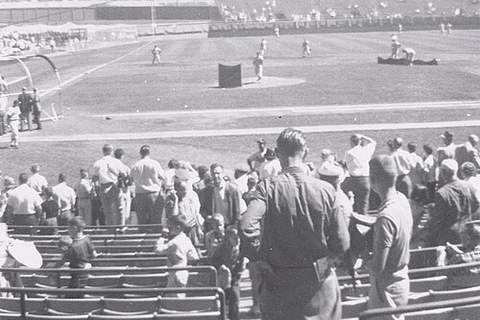
World SeriesMilwaukee Braves beat New York Yankees 4-3
FootballNFL Championship Game (1957 season, December 29, 1957): Detroit Lions beat Cleveland Browns 59-14
BasketballBoston Celtics beat St. Louis Hawks 4-3
HockeyMontreal Canadiens beat Boston Bruins 4-1
Kentucky DerbyIron Liege, ridden by Bill Hartack
Moments people remember
Jan. 5Jackie Robinson retired rather than move across town from the Dodgers to the Giants, who had traded for him (January 5, 1957)
Oct. 8Walter O'Malley announced that the Dodgers would move from Brooklyn to Los Angeles (October 8, 1957)
Wikipedia: World Series, Super Bowl, NBA, Stanley Cup and Kentucky Derby champion lists, Olympic medal tables and “1957 in sports”.
The year
Everybody was talking about
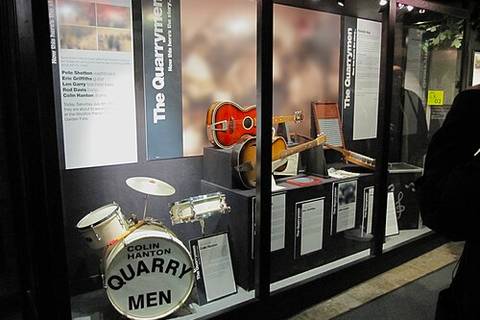
July 6WorldFifteen-year-old Paul McCartney met John Lennon and his band, the Quarrymen, at a church fete in Woolton, England.Read more
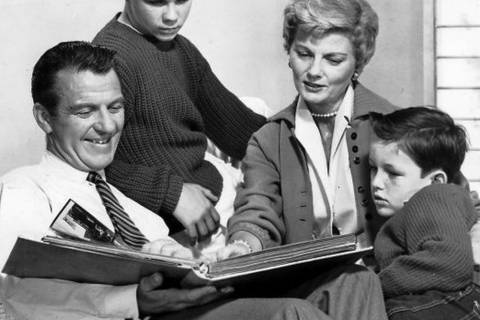
Oct. 4The family sitcom Leave It to Beaver premiered on CBS.Read more
Oct. 4WorldThe Soviet Union launched Sputnik 1, the first artificial satellite to orbit the Earth, and the Space Age began.Read more
Oct. 10The Milwaukee Braves beat the New York Yankees 4 games to 3 to win the World Series.Read more
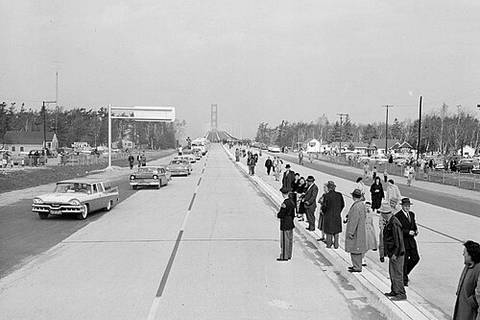
Nov. 1The Mackinac Bridge, then the world's longest suspension bridge between anchorages, opened to traffic linking Michigan's two peninsulas.Read more
Wikipedia: “1957 in the United States” and “1957” (CC BY-SA 4.0)
The hard news
What the country went through
The disasters, health scares and scandals of 1957.
Jan. 30ScandalThe Senate created the McClellan Committee to study improper practices in labor-management relations; it took testimony from 1,526 witnesses over 270 days of hearings.Read more
May 20DisasterAn F5 tornado moved through eastern Kansas and western Missouri, striking the Kansas City area and killing forty-four people.Read more
June 27DisasterHurricane Audrey struck southwestern Louisiana with a storm surge reaching 20 miles inland, killing at least 416 people in the United States, most in Cameron Parish.Read more
Oct.HealthThe Asian flu pandemic peaked in the United States in October; between 60,000 and 70,000 excess deaths occurred in the US from October 1957 to March 1958.Read more
Wikipedia event articles and lists (CC BY-SA 4.0). Death tolls as the sources state them.
1970. An oxygen tank exploded on Apollo 13, forcing astronauts Jim Lovell, Fred Haise and Jack Swigert to abort their Moon mission and head home.
1975. Bill Gates and Paul Allen founded Microsoft in Albuquerque, New Mexico.
1979. The Three Mile Island plant in Pennsylvania had the most serious nuclear power accident in American history.
The song of 1975: “Love Will Keep Us Together,” Captain & Tennille.
The best-selling car: Chevrolet Impala / Caprice.
New at home: the RCA XL-100 color television.
Milwaukee Avenue, Chicago, 1981
The 1980s
Ages 23 to 32
1980. Mount St. Helens erupted in Washington State, killing 57 people and causing $3 billion in damage.
1985. Coca-Cola changed its recipe and released New Coke; the response was so negative the original formula returned in less than three months.
1989. The 6.9 Loma Prieta earthquake shook the San Francisco Bay Area and the Central Coast, killing 63 people.
The song of 1985: “Like a Virgin,” Madonna.
The best-selling car: Chevrolet Cavalier.
New at home: the Sony Walkman TPS-L2.
The Loop, Chicago, 1997
The 1990s
Ages 33 to 42
1990. Space Shuttle Discovery placed the Hubble Space Telescope into orbit around Earth.
1995. Toy Story, the first full-length computer-animated feature film, was released by Pixar and Walt Disney Pictures.
1999. The cartoon SpongeBob SquarePants made its debut on Nickelodeon.
The song of 1995: “Fantasy,” Mariah Carey.
The best-selling car: Ford Taurus.
New at home: the Nintendo Game Boy.
Michigan Avenue at Jackson Boulevard, Chicago, 2007
The 2000s
Ages 43 to 52
2000. The final original Peanuts comic strip ran in newspapers, the day after creator Charles M. Schulz died.
2005. Hurricane Katrina struck the Gulf Coast from Louisiana to Mississippi, killing at least 1,836 people and becoming the costliest hurricane in US history.
2009. Pilot Chesley "Sully" Sullenberger landed US Airways Flight 1549 on the Hudson River after both engines failed, and all 155 people on board were rescued.
The song of 2005: “We Belong Together,” Mariah Carey.
The best-selling car: Toyota Camry.
New at home: the Apple iPod.
Michigan Avenue at Madison Street, Chicago, 2013
The 2010s
Ages 53 to 62
2010. Apple released the first iPad in the United States.
2015. American Pharoah won the Belmont Stakes to become the first horse in 37 years to win horse racing's Triple Crown.
2019. Marvel Studios released Avengers: Endgame, which broke box office records and became the second highest-grossing film of all time.
The song of 2015: “Uptown Funk,” Mark Ronson featuring Bruno Mars.
The best-selling car: Toyota Camry.
New at home: the Apple iPhone 4.
State Street, Chicago, 2026
The 2020s
Ages 63 to 69
2020. The Kansas City Chiefs beat the San Francisco 49ers 31-20 in Super Bowl LIV, with Jennifer Lopez and Shakira headlining the halftime show.
2023. LeBron James broke Kareem Abdul-Jabbar's all-time NBA scoring record, reaching 38,388 points.
2026. NASA launched Artemis II from Kennedy Space Center in Florida, sending four astronauts past the Moon on the first crewed flight that far since 1972.
The song of 2025: “Luther,” Kendrick Lamar and SZA.
The best-selling car: Toyota Camry.
New at home: the Sony PlayStation 5.
Your mother
The day your mom had you
What it was like in 1957
Your mom almost certainly had you in a hospital. By 1955, 95 percent of American babies were born in one.
When your mom got to the hospital, she probably went to a 'prep room' first, where nurses shaved her and gave her an enema. Then she spent most of her labor alone, sometimes sedated.
When you were born, your dad most likely waited in an all-male waiting room down the hall, pacing and smoking cigarettes until someone came out with the news.
Your mom may not remember much of your birth. Many doctors were still giving laboring women scopolamine, the amnesia drug behind 'twilight sleep,' well into the 1960s, and plenty of mothers of that era were fully put under.
Around the time you were born, Ladies' Home Journal ran 'Cruelty in Maternity Wards' (May 1958), in which mothers described being strapped down for hours during labor. It caused a national outcry and helped kick off the childbirth reform movement.
Right after you were born, you were most likely taken off to the hospital nursery and fed on a strict schedule, while your mom waited in her room. 'Rooming-in,' where babies stayed with their mothers, was still a rare experiment.
Your mom probably got a long hospital stay. In the years after World War II, the standard stay for childbirth grew to as many as 10 days.
Sources: History News Network (Judith Walzer Leavitt), How Did Men End Up in the Delivery Room? · Yale University, History of Medicine senior essay (Catherine Gliwa), Out of the Twilight: Continuous Caudal Anesthesia and the Modernization of Obstetric Pain Management in America, 1940-1960 · Journal of Perinatal Education (PMC), Cruelty in Maternity Wards: Fifty Years Later · Intersect: The Stanford Journal of Science, Technology, and Society, Rooming-In: Cold War Consumer Product? · Kaiser Permanente History, Maternity care evolves to embrace family
Ask her, or ask about her
12 months before you were born: Don Larsen of the New York Yankees pitched the only perfect game in World Series history, against the Brooklyn Dodgers. Did your parents ever talk about it?
6 days after you were born: The Milwaukee Braves beat the New York Yankees 4 games to 3 to win the World Series. Ask what they remember about it.
When you were 15 months old: The Baltimore Colts beat the New York Giants 23-17 in the first NFL Championship Game to go to sudden-death overtime, called the Greatest Game Ever Played. Do they remember where they were?
Were you awake when I was born, or did they put you to sleep? What's the first thing you remember?
Where was Dad while you were in labor? Did he pace the waiting room with the other fathers?
How did you find out you were pregnant with me, and who did you tell first?
How long did you stay in the hospital after I was born, and what was it like?
Did they keep me in the nursery? How often did the nurses bring me to you?
Did you nurse me or bottle-feed me? Who gave you advice about it?
If she's still with you, call her and ask. If she isn't, ask the people who knew her then: a sister, an aunt, an old friend. Those answers make the best birthday stories.
Make it a gift
Keep it. Give it.
This whole issue, printed and bound as a hardcover book.
Back in Our DayThe Day You Were Born
The day she arrived
Linda
October 4, 1957 · Chicago
The hardcover
This issue, bound
Everything on this page, printed in full color and bound as a hardcover with the name and birthday on the cover. Classic $79 · Deluxe $109 · free shipping.
 Halsted Street at Maxwell Street, Chicago, 1958